
FrostPath drives live television graphics straight from the simulation — predicted shot paths, forecasts, and expected value on screen as the play unfolds. Underneath the overlays is a scalable broadcast engine: unlimited streams in and out, tools that run in the booth or the truck, automated replay recommendations, and agentic automation that runs the graphics live.
Request a Demo See the platform →In development with broadcast partners — television overlays and advanced graphics rendered in real time from FrostPath's physics engine and adaptive agents.
Predicted and actual rock paths with on-screen speed as the stone travels, rendered live.
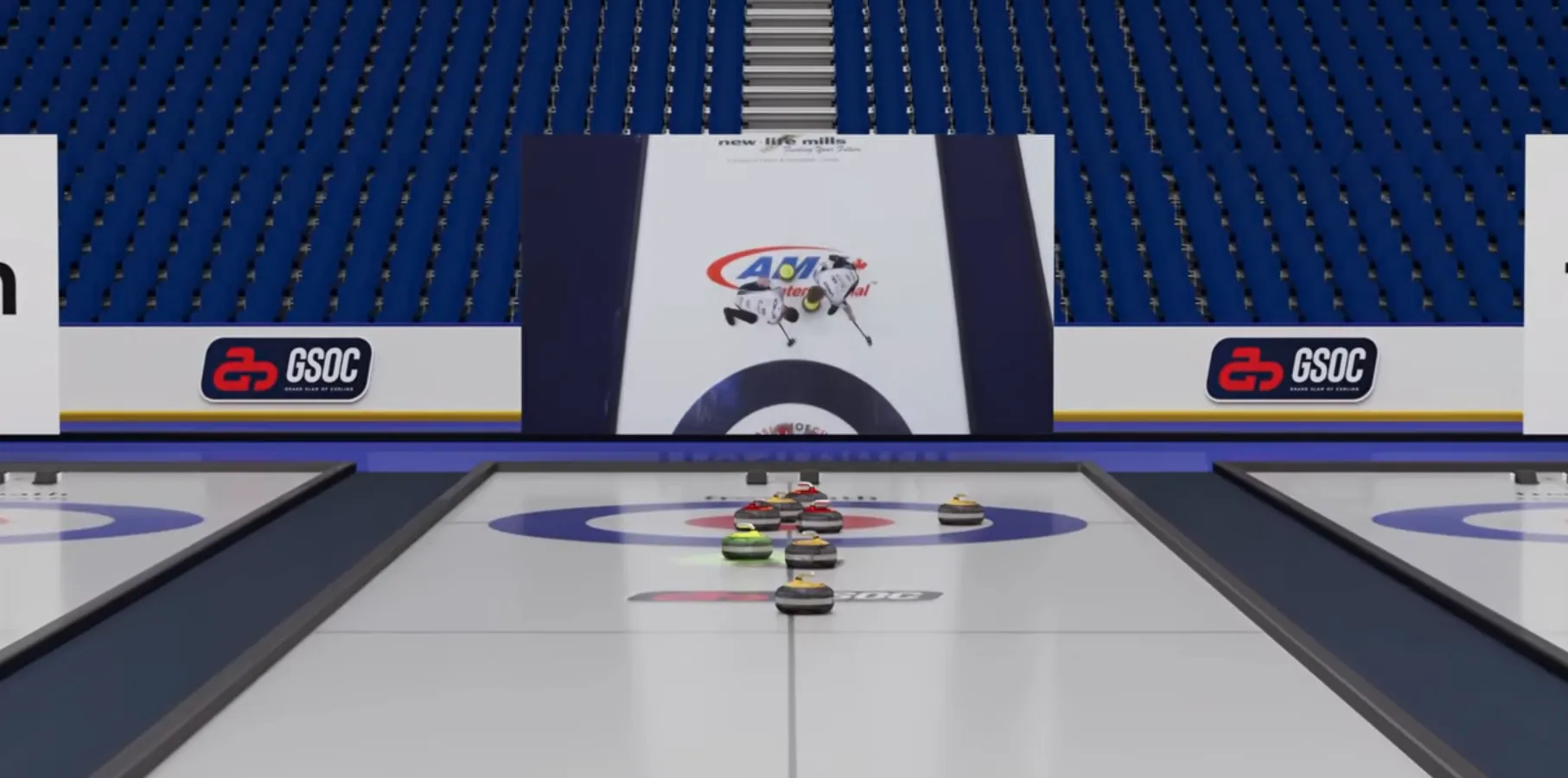
Quantify what sweeping is really doing.
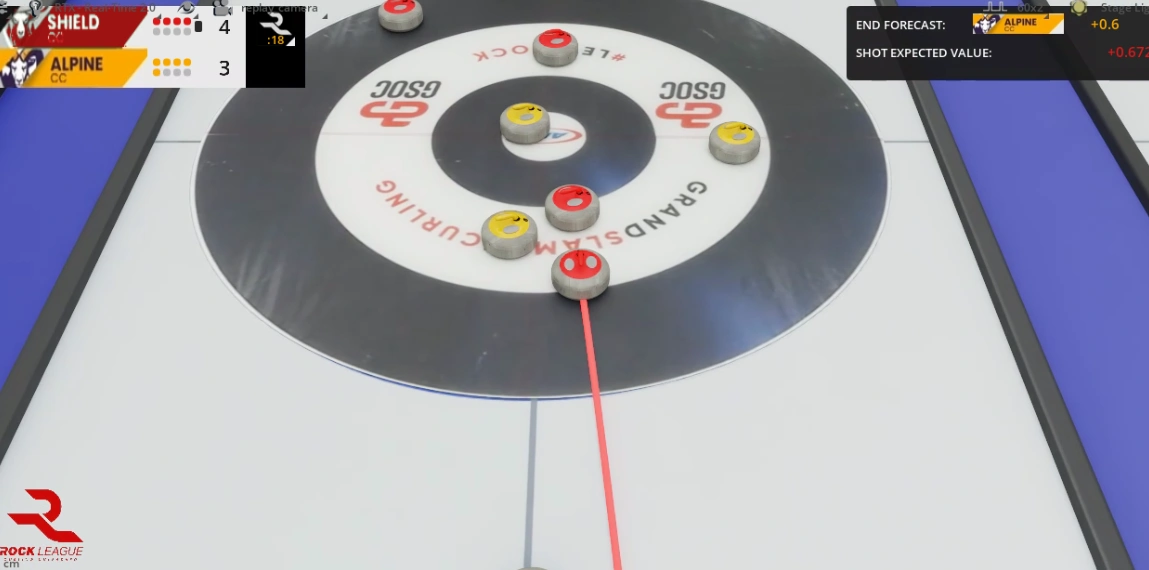
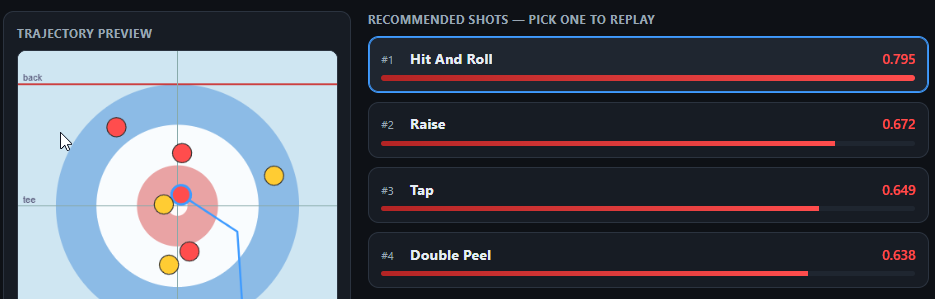
Strategic choices and their expected value.
Advertisement placements integrated into broadcast graphics.
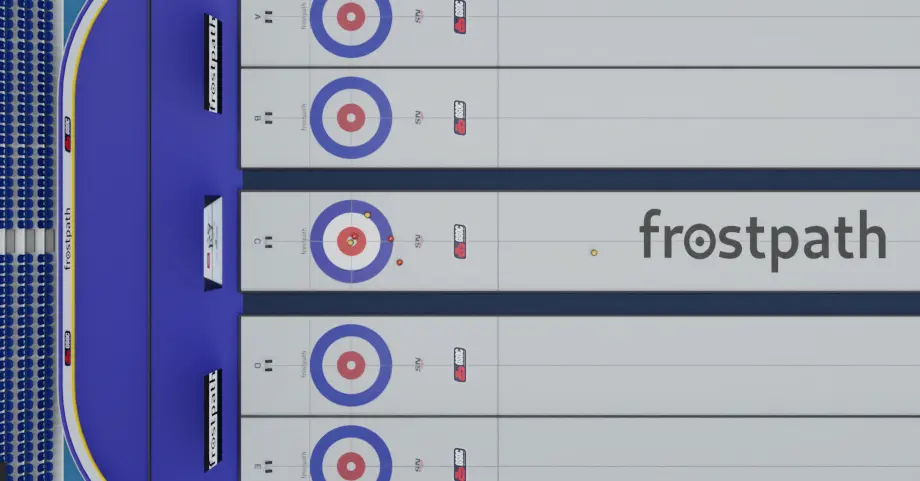
Ingest as many camera and data feeds as a production throws at it, and publish as many tailored output streams as the broadcast needs — main feed, alternate angles, per-region graphics, or clean and dirty versions side by side.
Because the pipeline is cloud-scalable, capacity grows with the event instead of being capped by a fixed hardware rig — one sheet or a full arena of them, one broadcaster or many.
Producers and analysts get an integrated control surface for the FrostPath graphics — arm overlays, call up shot options, and trigger forecasts on the fly, without a specialist rig.
Deploy it where the crew already works: on a tablet in the broadcast booth, or inside the existing production truck. No new gallery hardware, no bespoke install.
FrostPath scores the game as it happens — every shot's expected-value swing, every momentum shift — and ranks the moments most worth a replay, so the biggest turning points aren't missed in the run of play.
Recommendations surface to the producer with the context that makes them worth airing: what changed, by how much, and why it mattered.
Beyond one-off triggers, FrostPath's automation layer watches the live game state and drives the graphics package itself — arming shot traces as a rock is thrown, calling forecasts at decision points, and queuing replays as the moments happen.
The producer stays in control with an approve-and-override loop, while the agents handle the repetitive live operation — consistent graphics, lighter operational load, and coverage that scales to more games at once.
Unlimited scalable streams, tools for the booth or the truck, automated replay, and agentic automation — running on the cameras you already have.